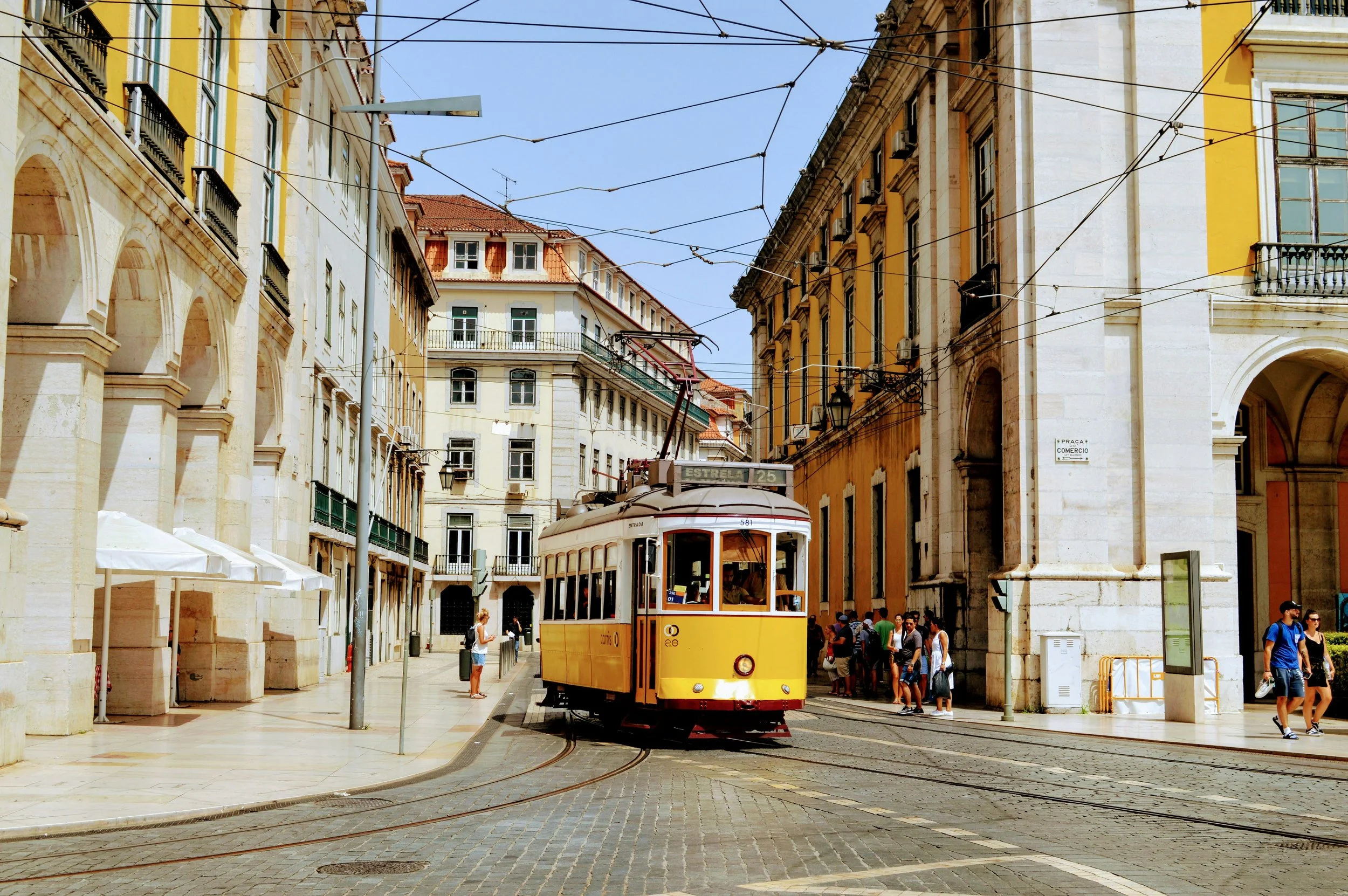
Lisbon was different than I expected. I had seen the photos — the trams, the tiles, the viewpoints — and thought I had a pretty good idea of what it would be like. But there's something about actually being there, walking the hills, stumbling into a market with life-changing pistachio fudge ice cream, watching the light change over the Tagus at golden hour, that you really just have to experience for yourself. Here's how to make the most of 2–3 days.
Where to Stay
We stayed at the Pestana Rua Augusta, which is beautifully designed, central, and has rooms with great atmosphere. It’s on one of the main pedestrian streets in the Baixa neighborhood, which means you can walk to most things. Other solid options include Bairro Alto Hotel (for a more boutique, design-forward stay) and the Memmo Alfama (for views over the Alfama neighborhood and the river).
Day 1: Baixa, Chiado & Bairro Alto
Mercado da Baixa
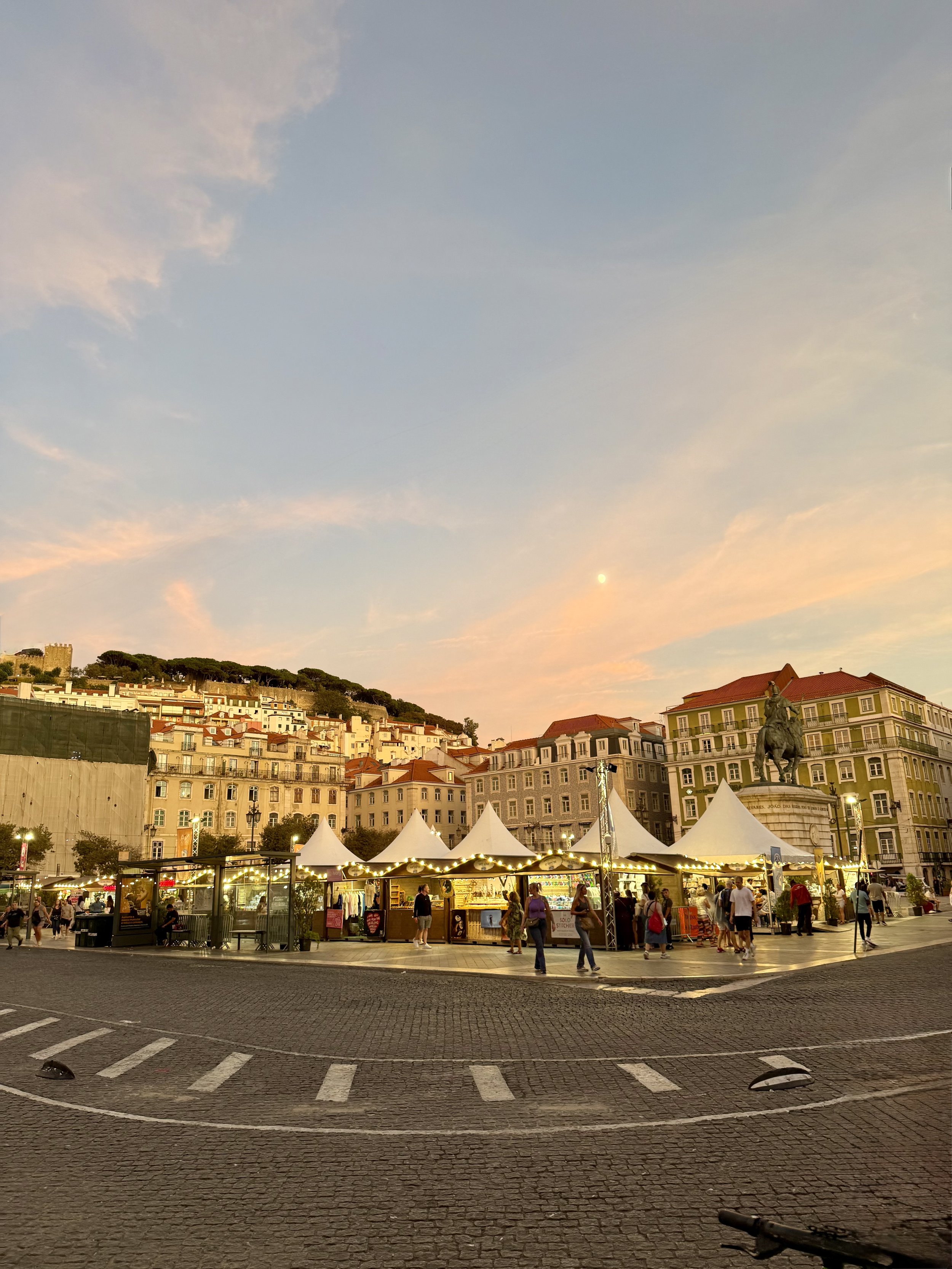
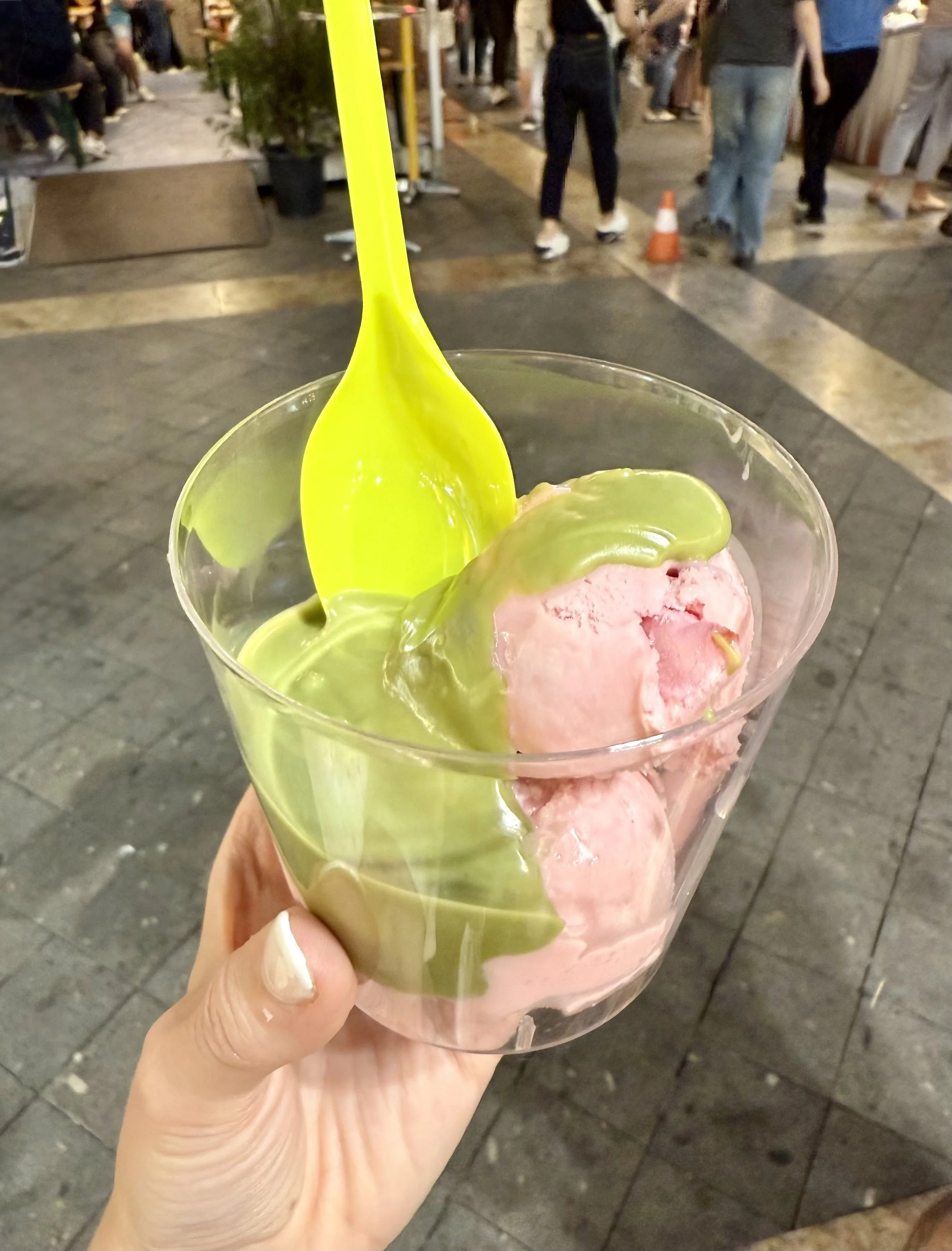
A great first stop — an open-air market area in the heart of the city. It’s lively and central, and worth multiple visits at different times of day. The sunset views from here are beautiful. And if you see strawberry ice cream with pistachio fudge anywhere near it: get it immediately. Trust.
Chiado & Bairro Alto
These two adjacent neighborhoods are Lisbon at its most walkable and charming. Chiado is polished and literary — think independent bookshops, the famous Livraria Bertrand (the world’s oldest operating bookshop), good coffee, and the beautiful Igreja do Carmo ruins open to the sky after the 1755 earthquake. Bairro Alto is where the streets get steeper and the character gets grittier — antique shops, independent boutiques, and a bar scene that comes alive at night.
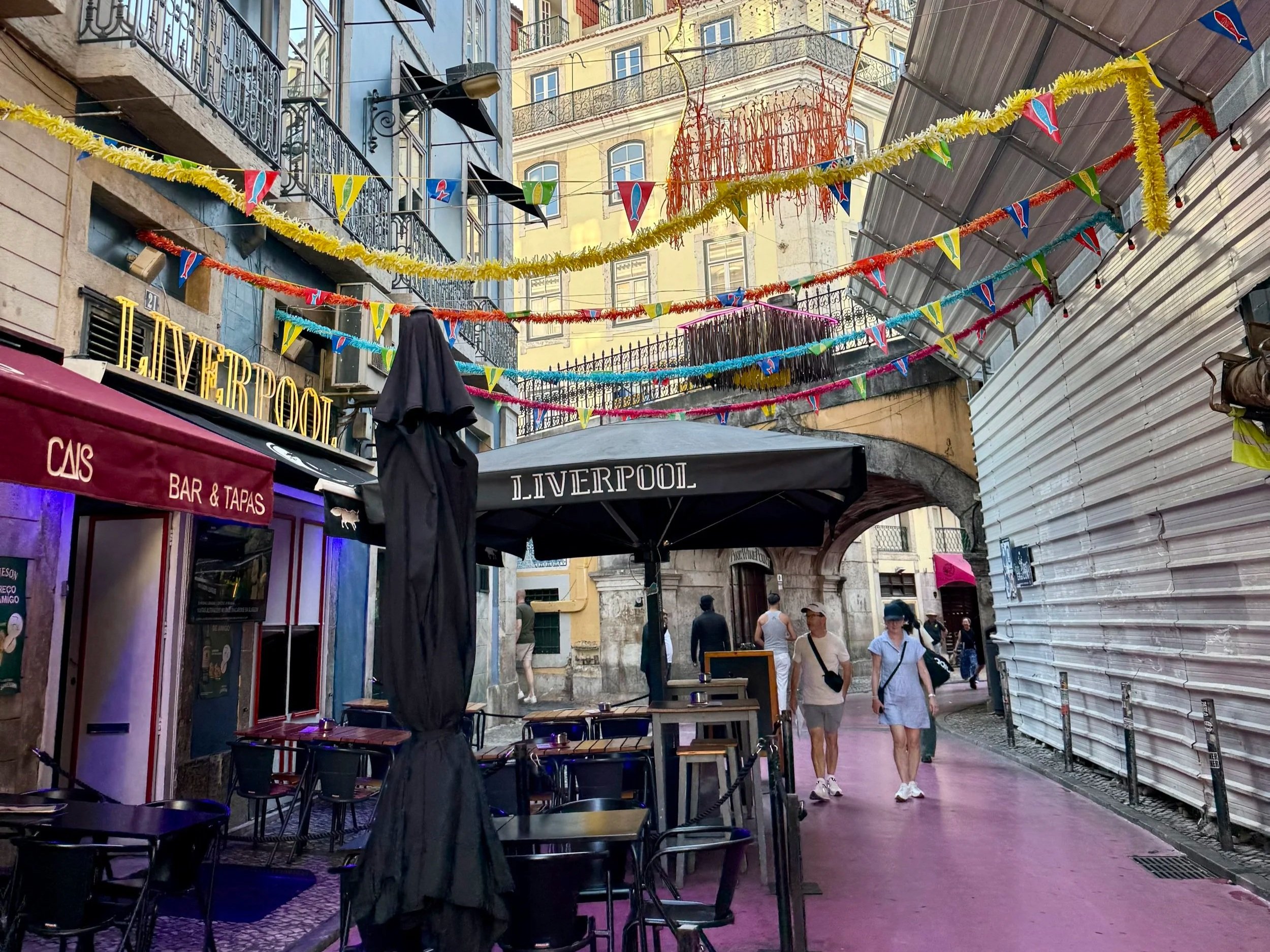
Pink Street (Rua Nova do Carvalho)
Lisbon’s famous pink-painted nightlife street is worth a walk-through — it’s lively and colorful. Honest take though: it’s very crowded and leans heavily tourist. It’s a see-it-so-you-can-say-you-did situation rather than a genuine highlight. Don’t plan your evening around it.
Dinner: Mini Bar (José Avillez)
One of celebrated chef José Avillez’s Lisbon spots, Mini Bar does creative Portuguese tapas in a cool, intimate setting. A great dinner for two — order several small plates and a bottle of something local.
Day 2: Sintra, Pena Palace & Cabo da Roca
We spent our second full day on a guided day tour out of Lisbon, and it was both stunning and a lot to process. Booking a tour is the move here — you get the history and context, plus someone who knows how to navigate the crowds.
Pena Palace
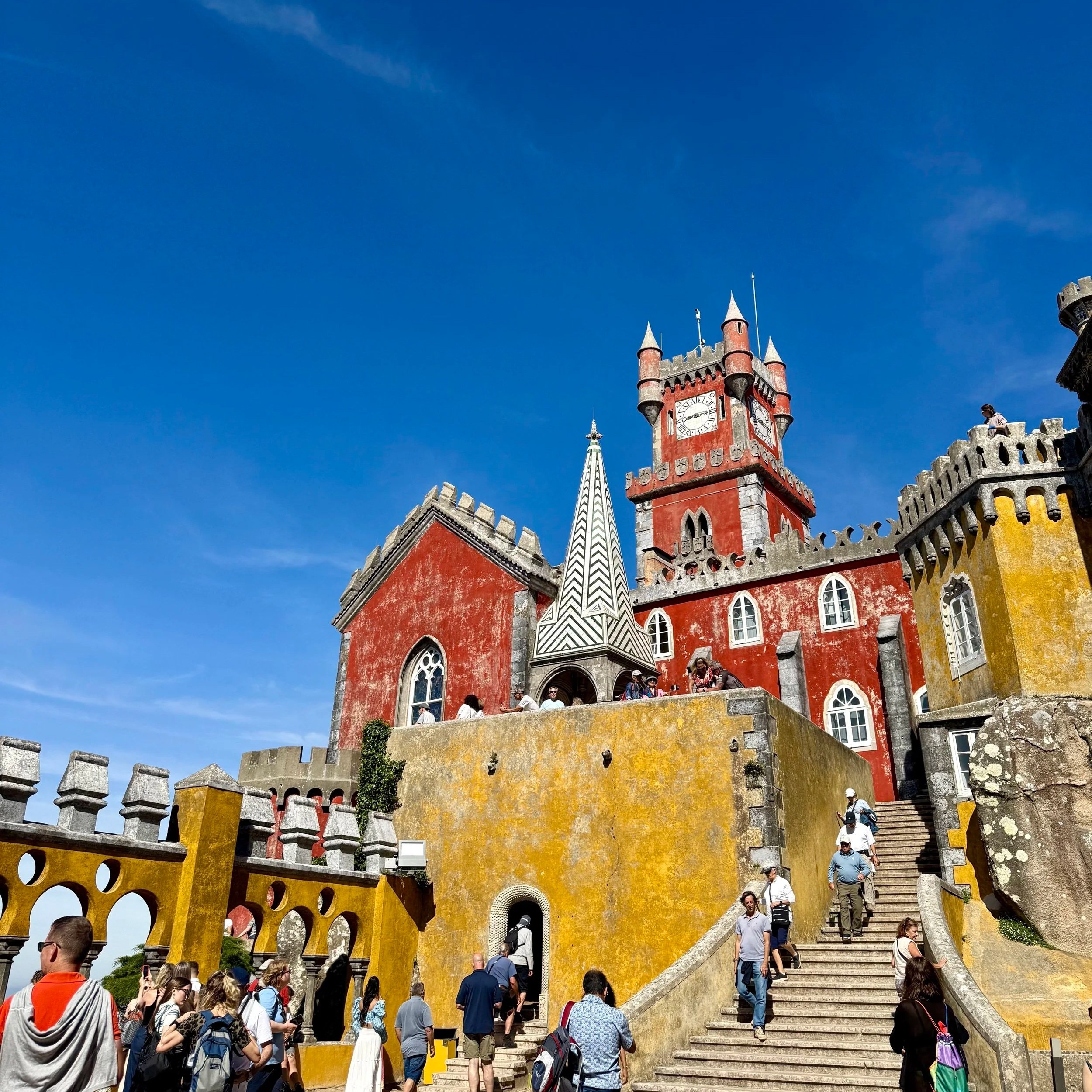
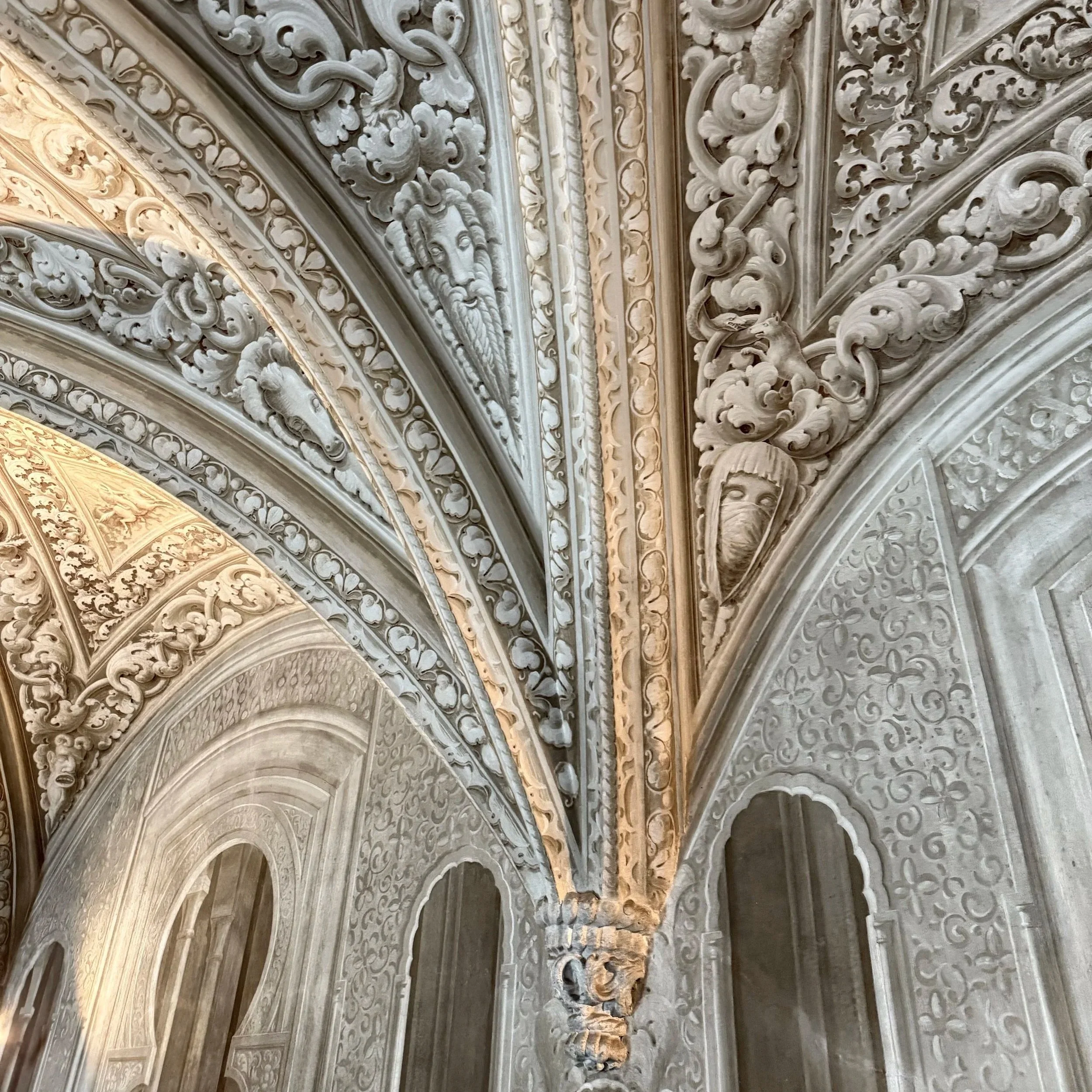
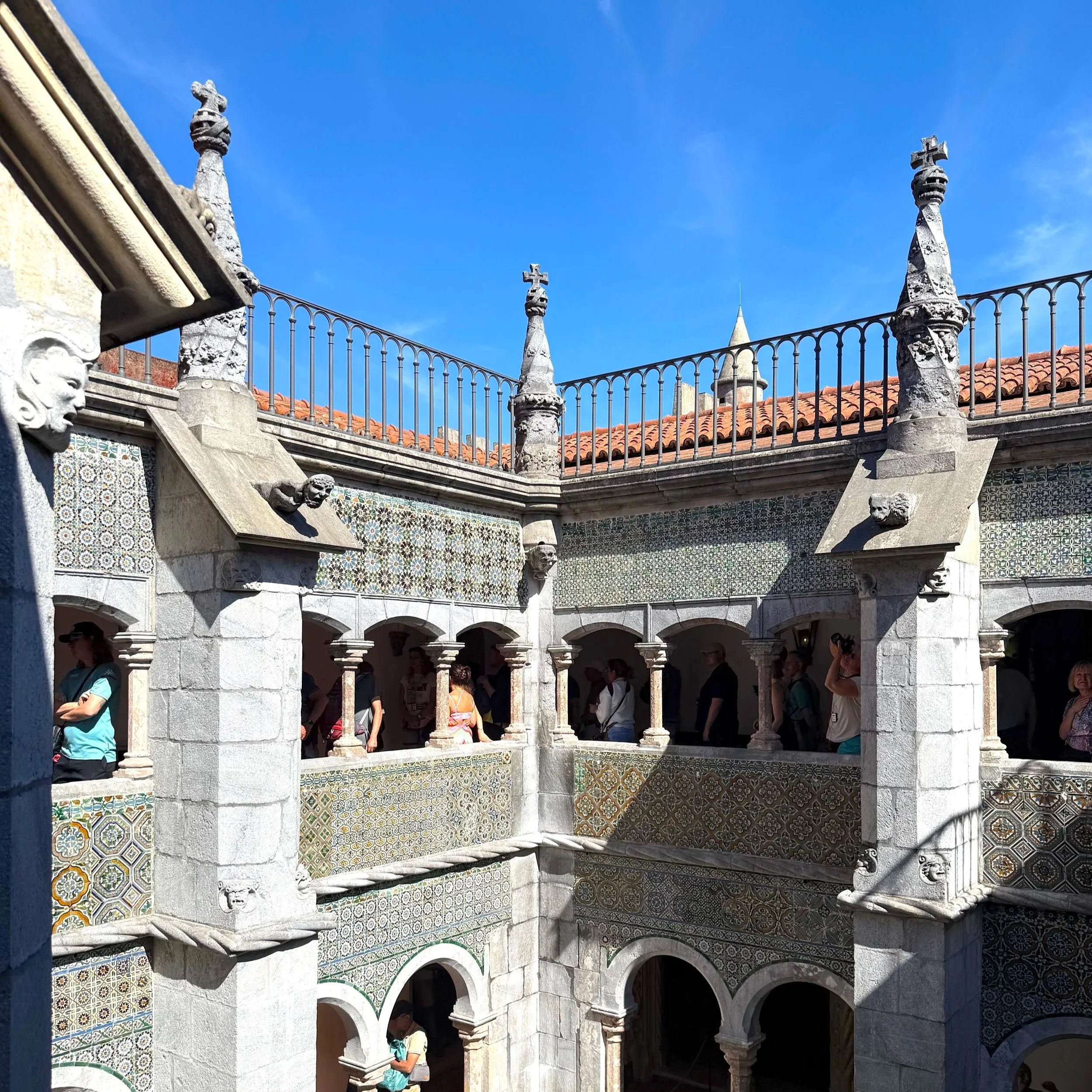
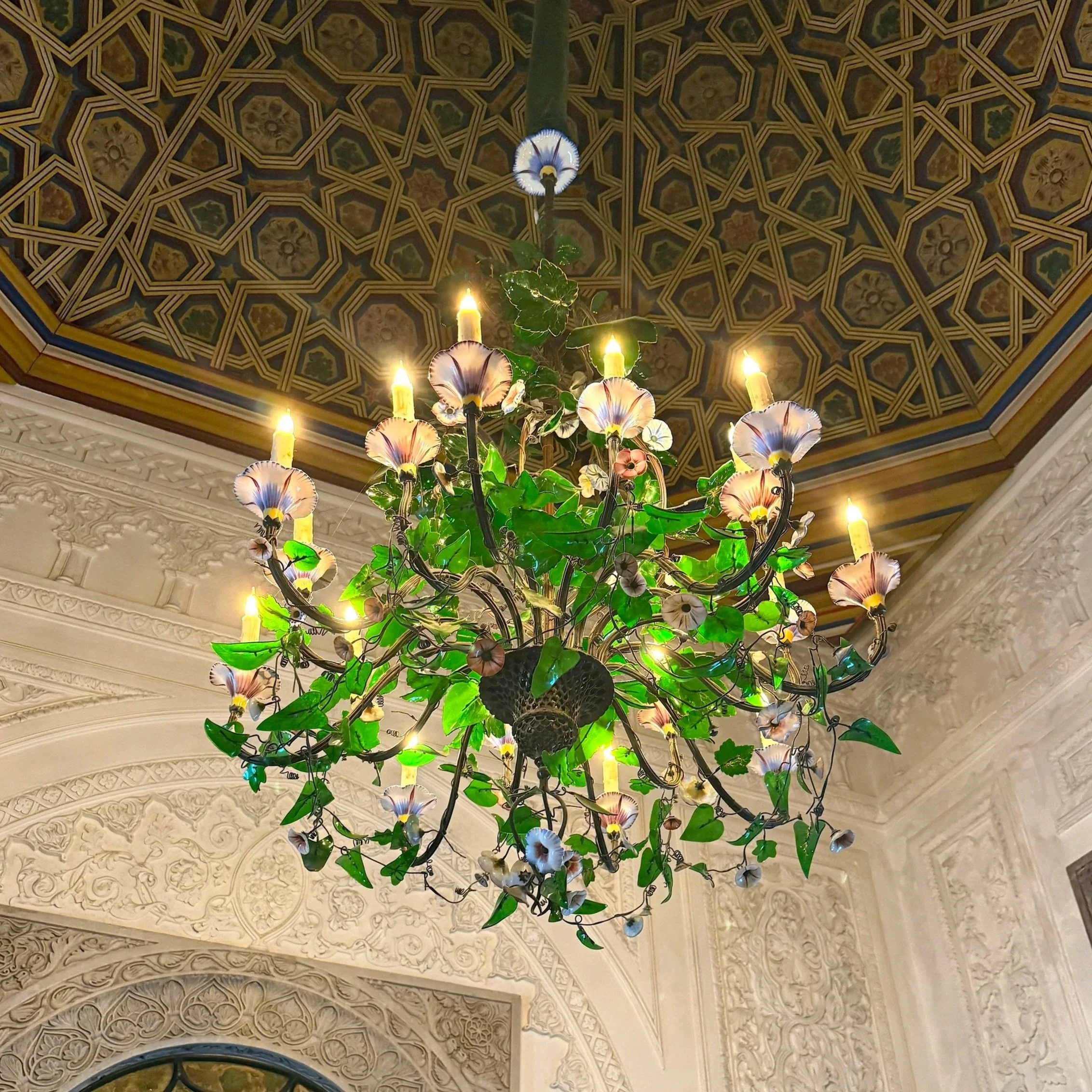
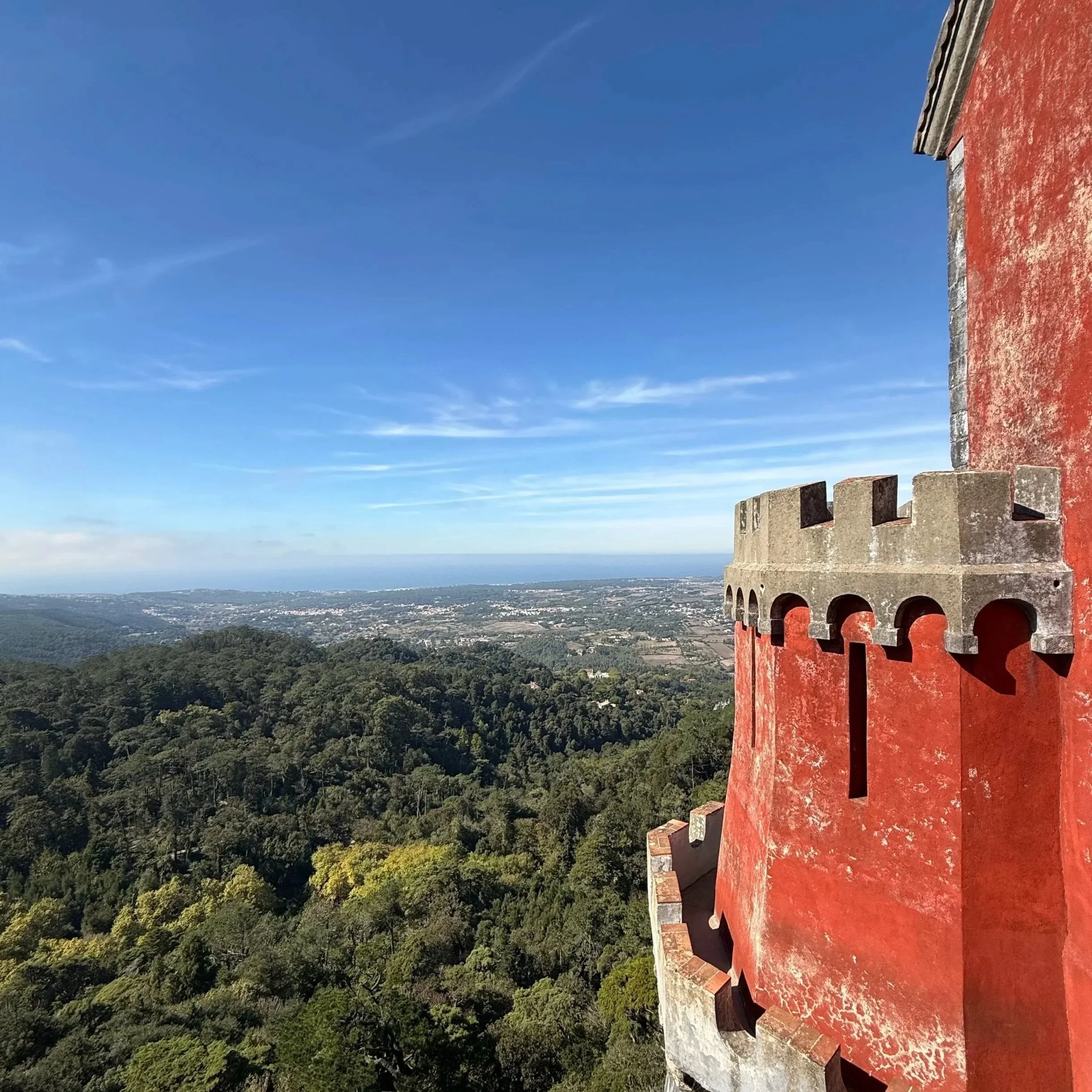
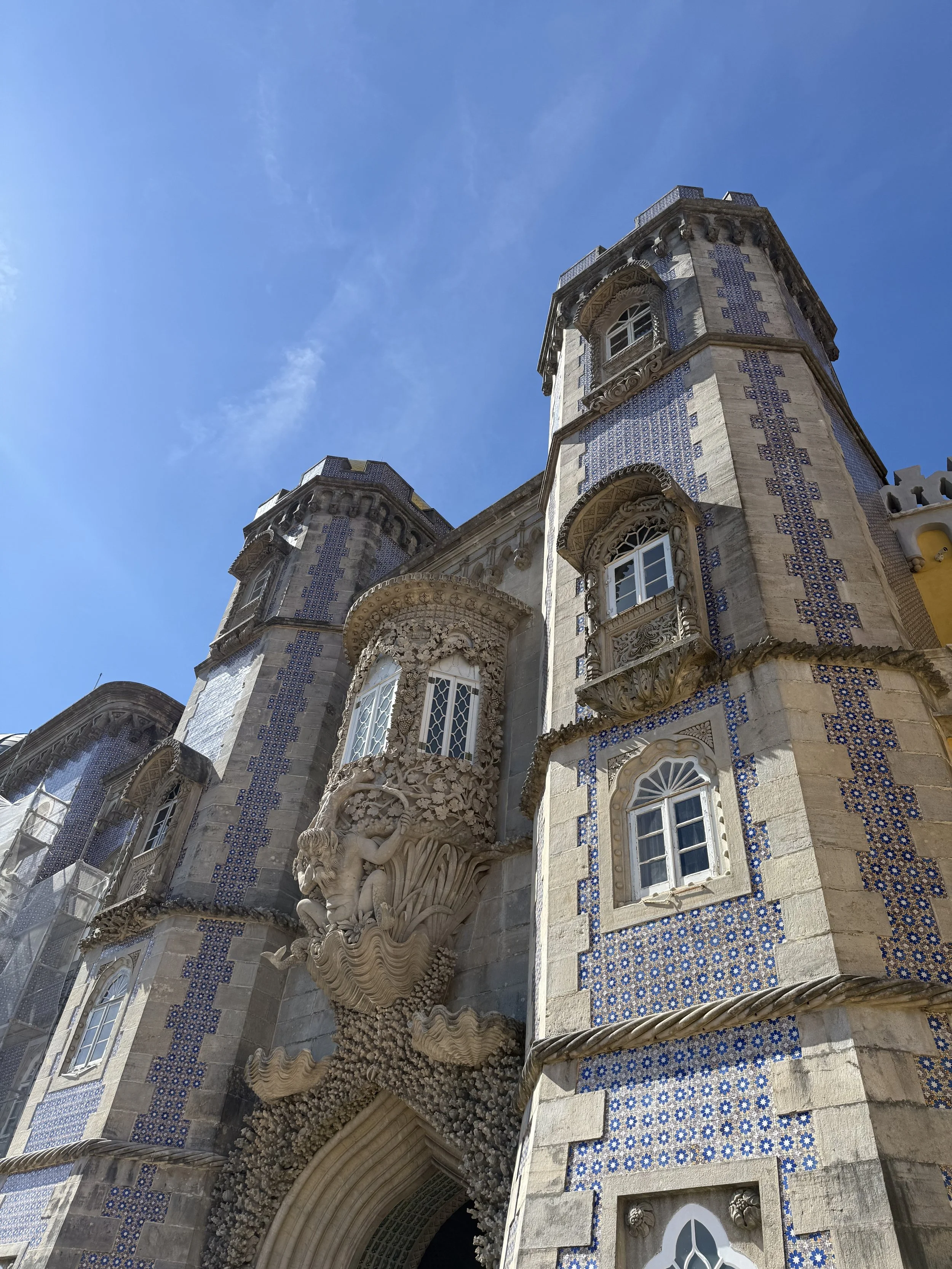
The showstopper. A wildly colorful Romanticist palace perched on a hilltop above Sintra, built by King Ferdinand II in the 19th century as a romantic retreat for the royal family. We explored the whole palace with our group — the architecture, the rooms, the grounds. It looks like something out of a fairy tale because it basically is. Book tickets in advance, lines are long even in shoulder season.
Sintra
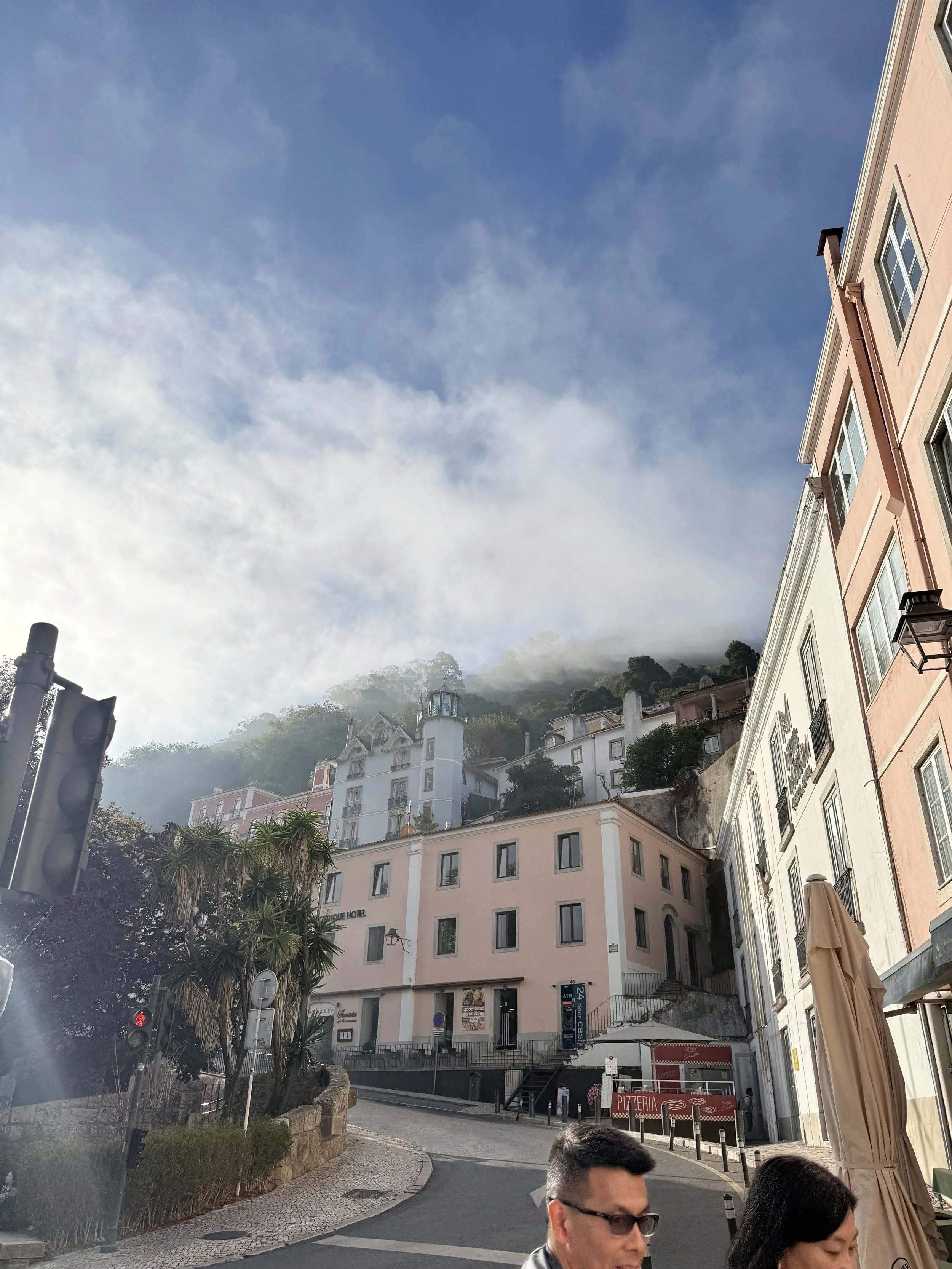
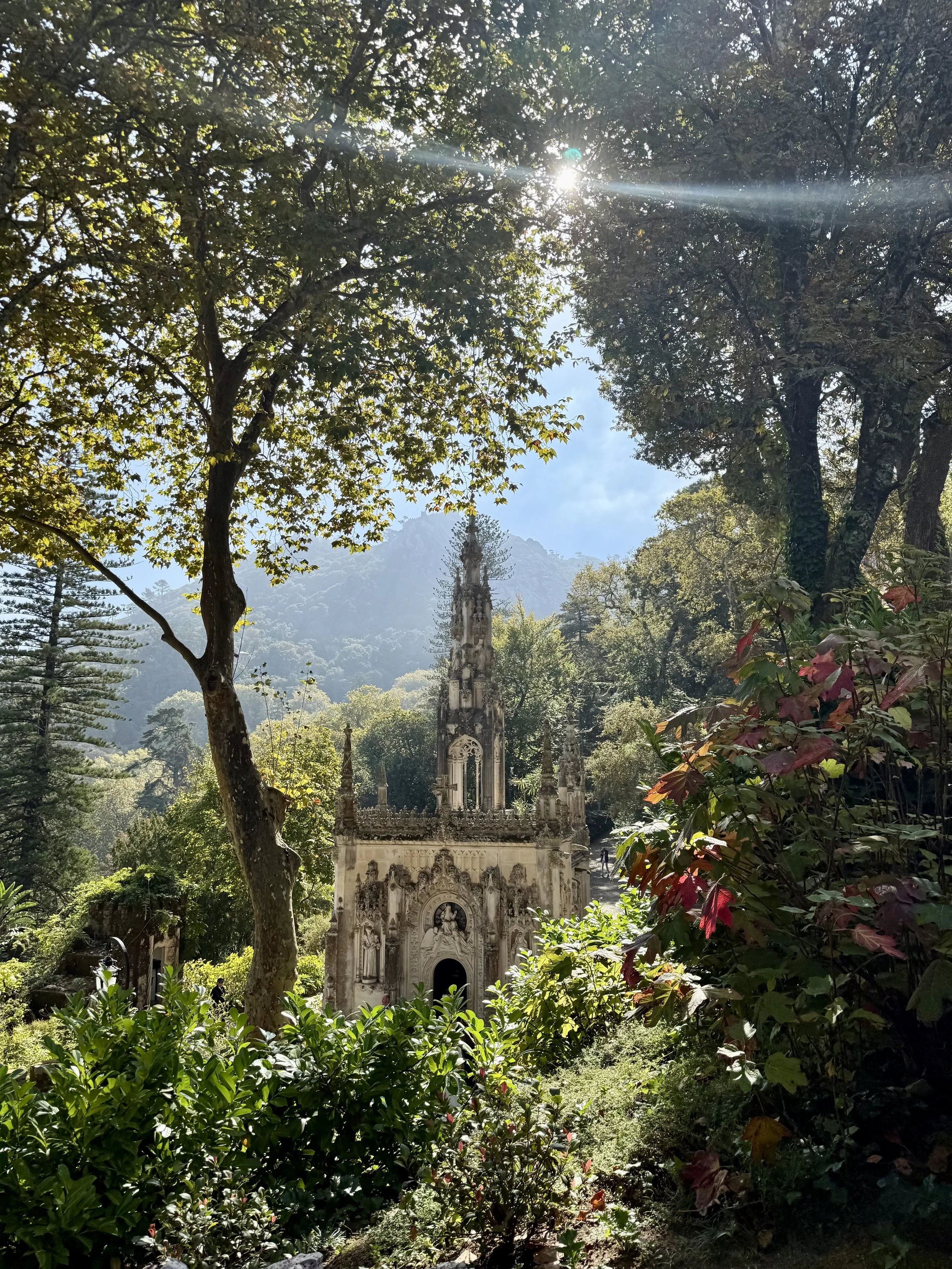
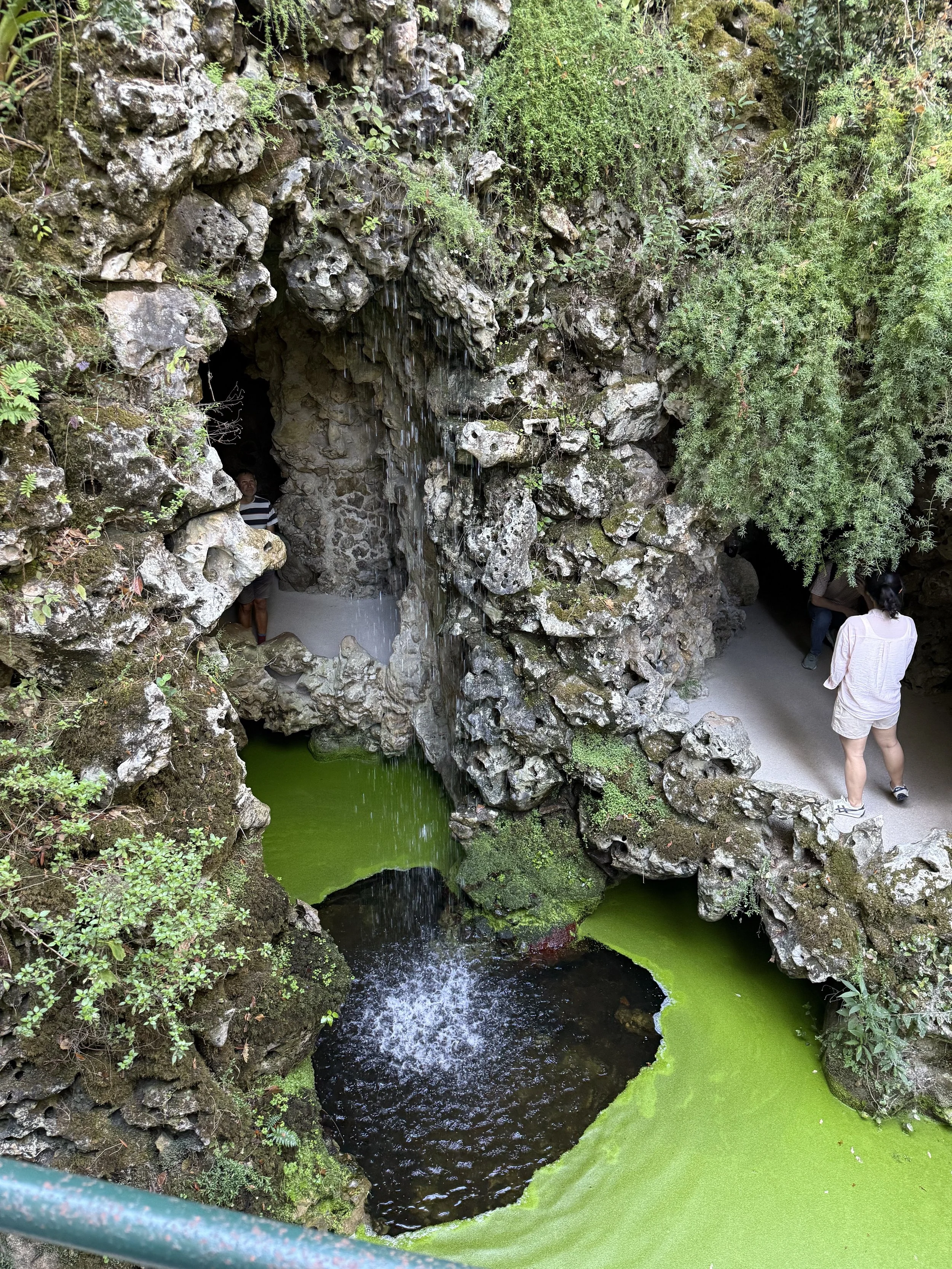
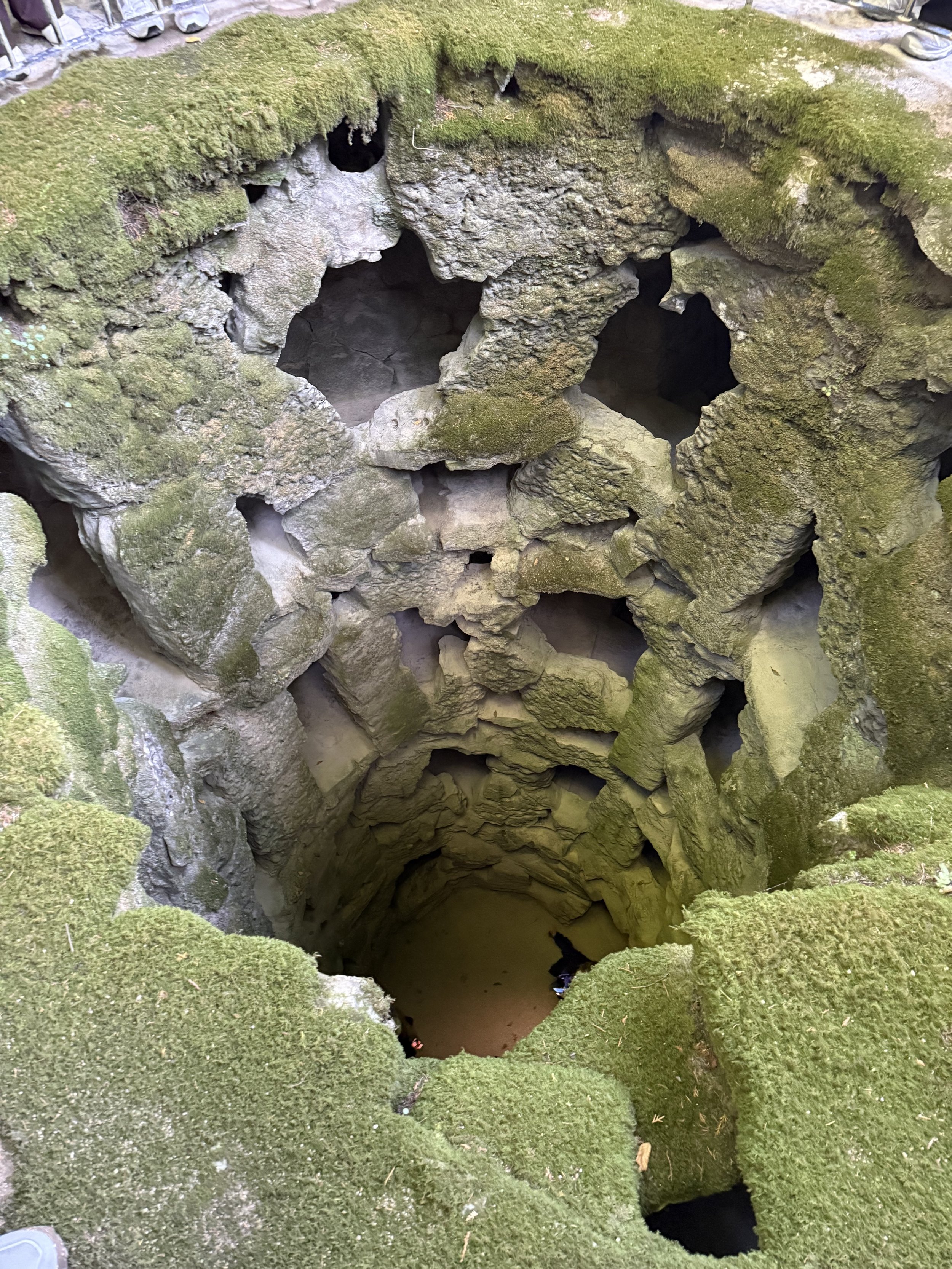
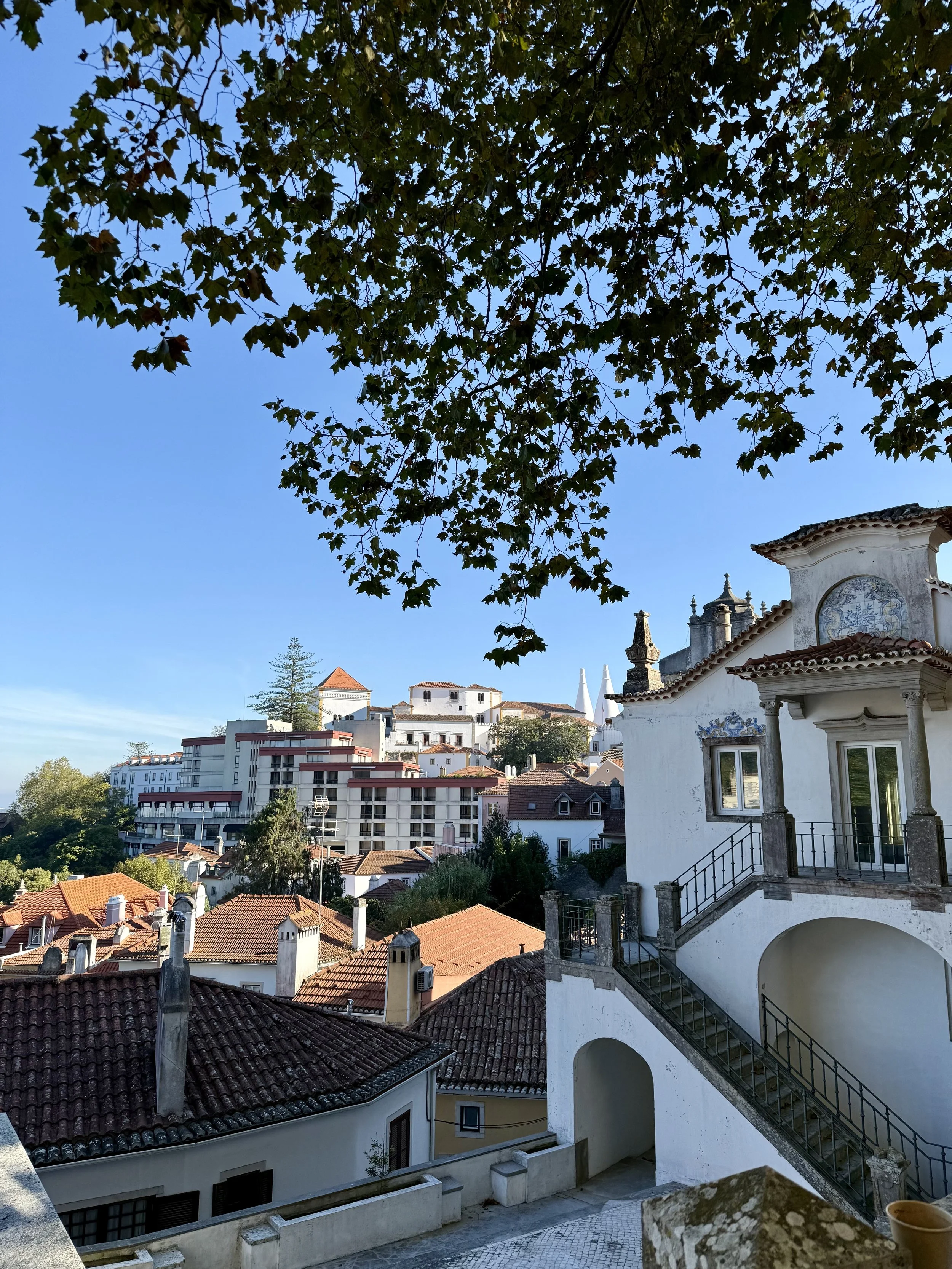
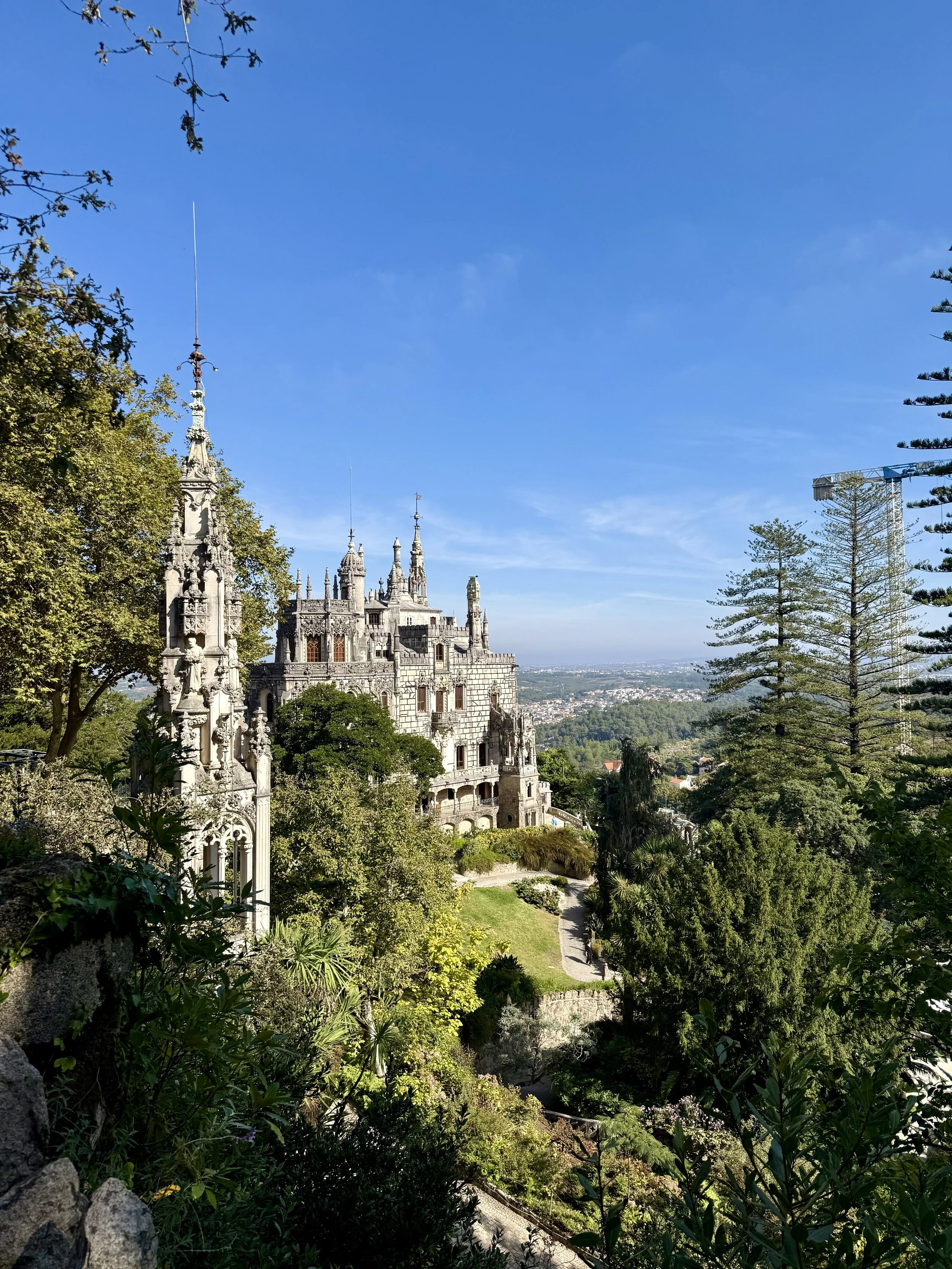
A UNESCO World Heritage town built into forested hills, full of history and extravagant palaces at every turn. Our tour guide gave us the full backstory — especially the families who built it. One honest note: Sintra is heavily overtouristed and we felt it. Getting a photo without a crowd in the frame was nearly impossible. It's gorgeous, but go in knowing that.
Cabo da Roca
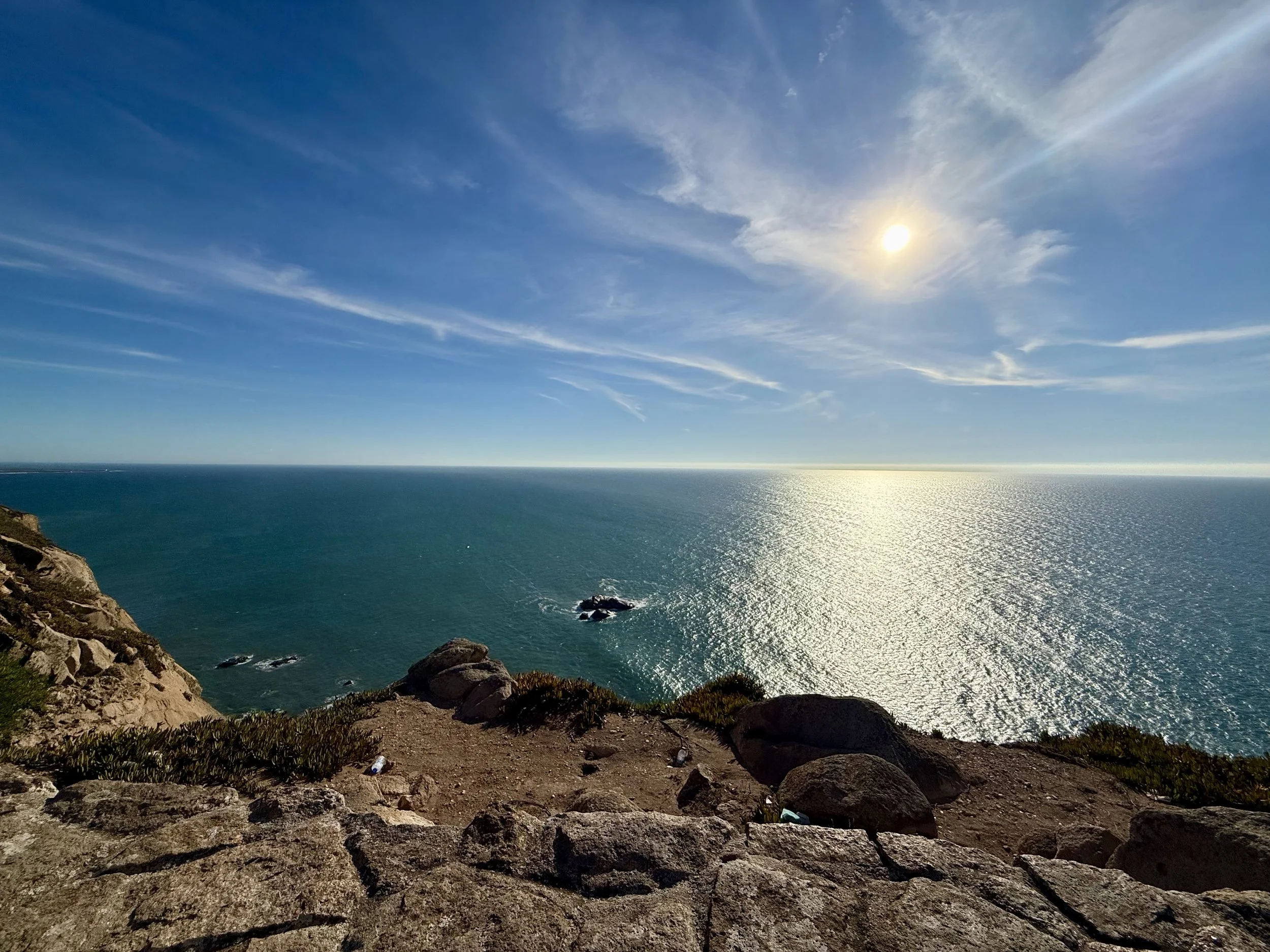
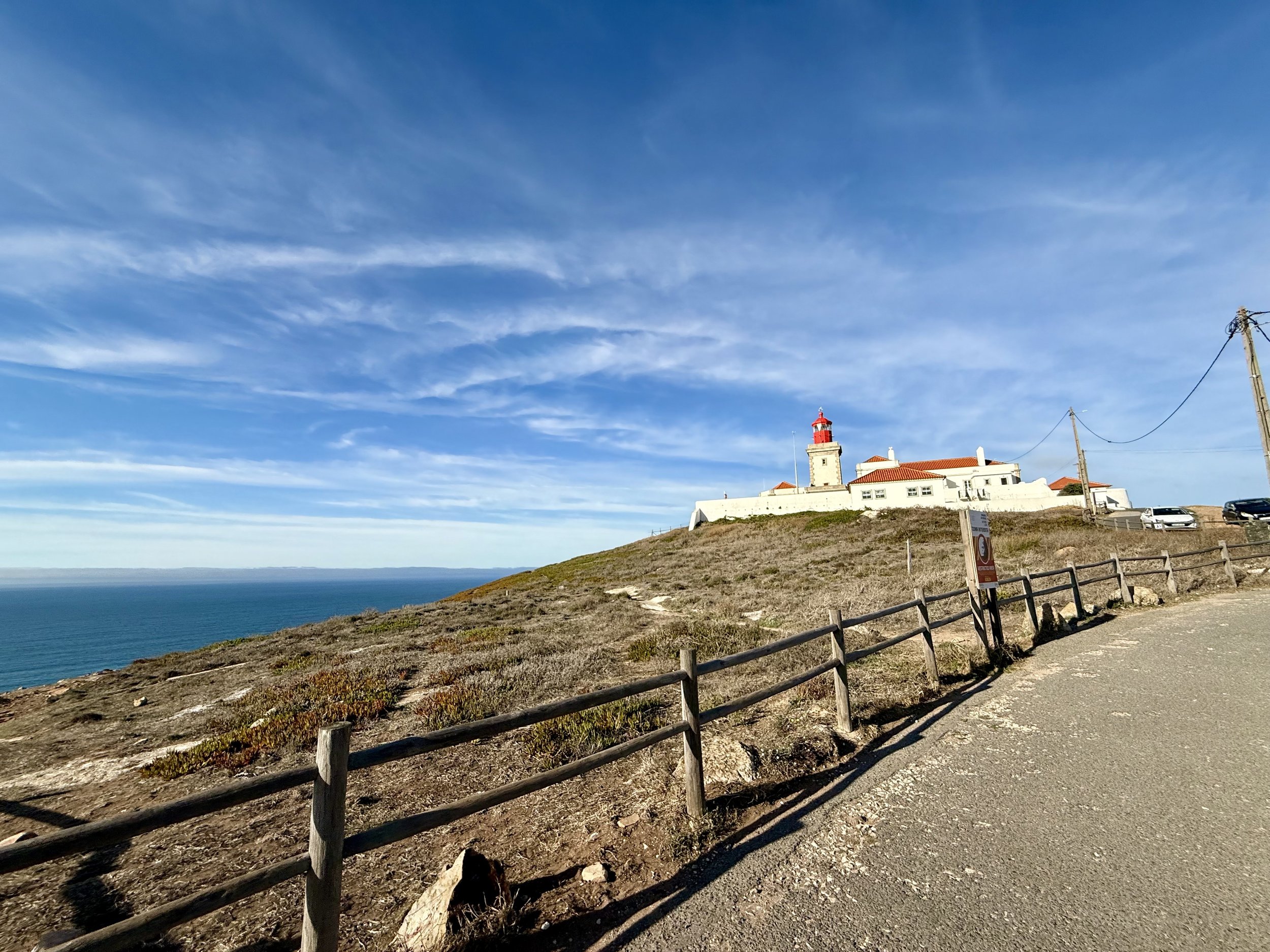
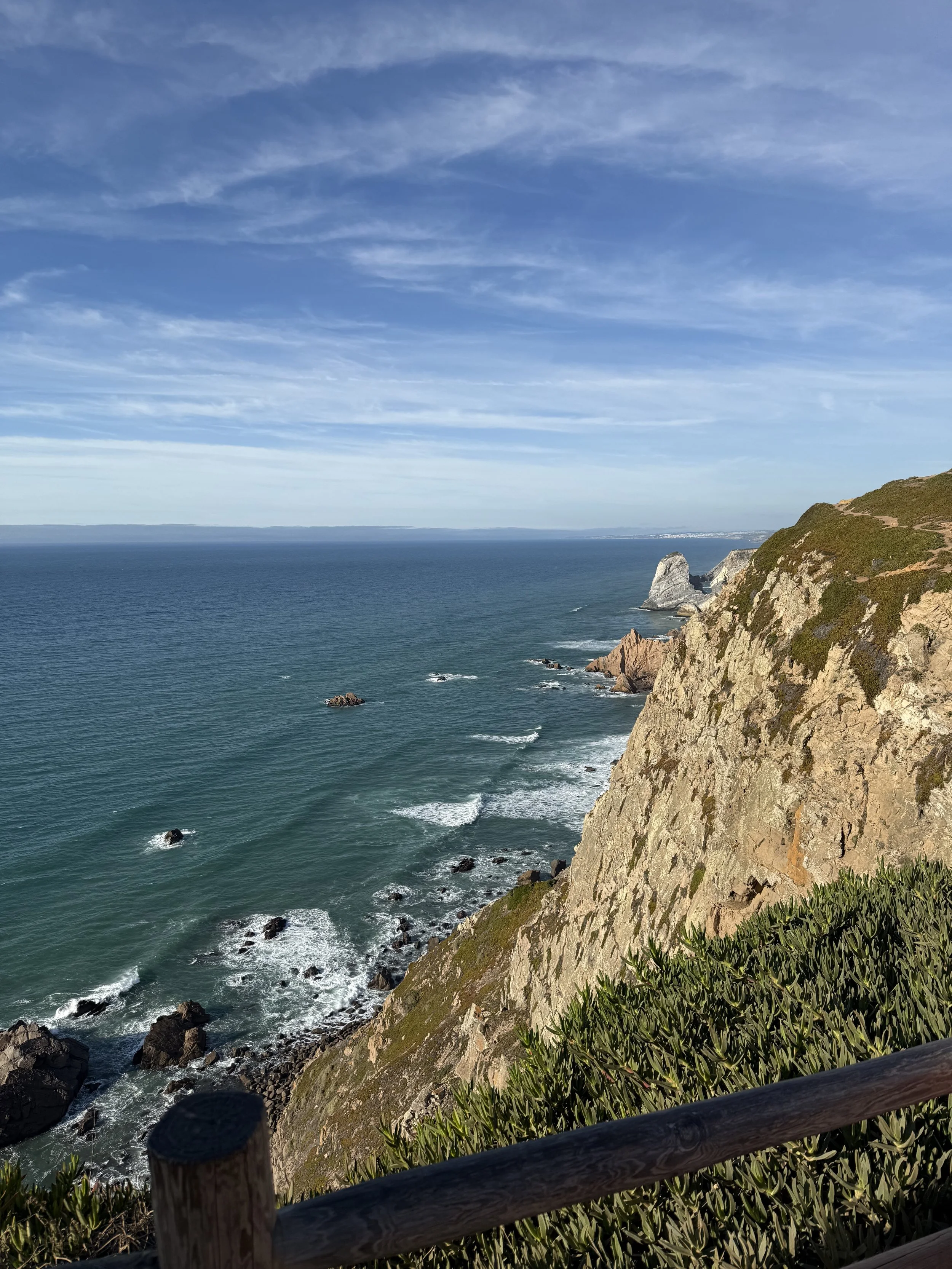
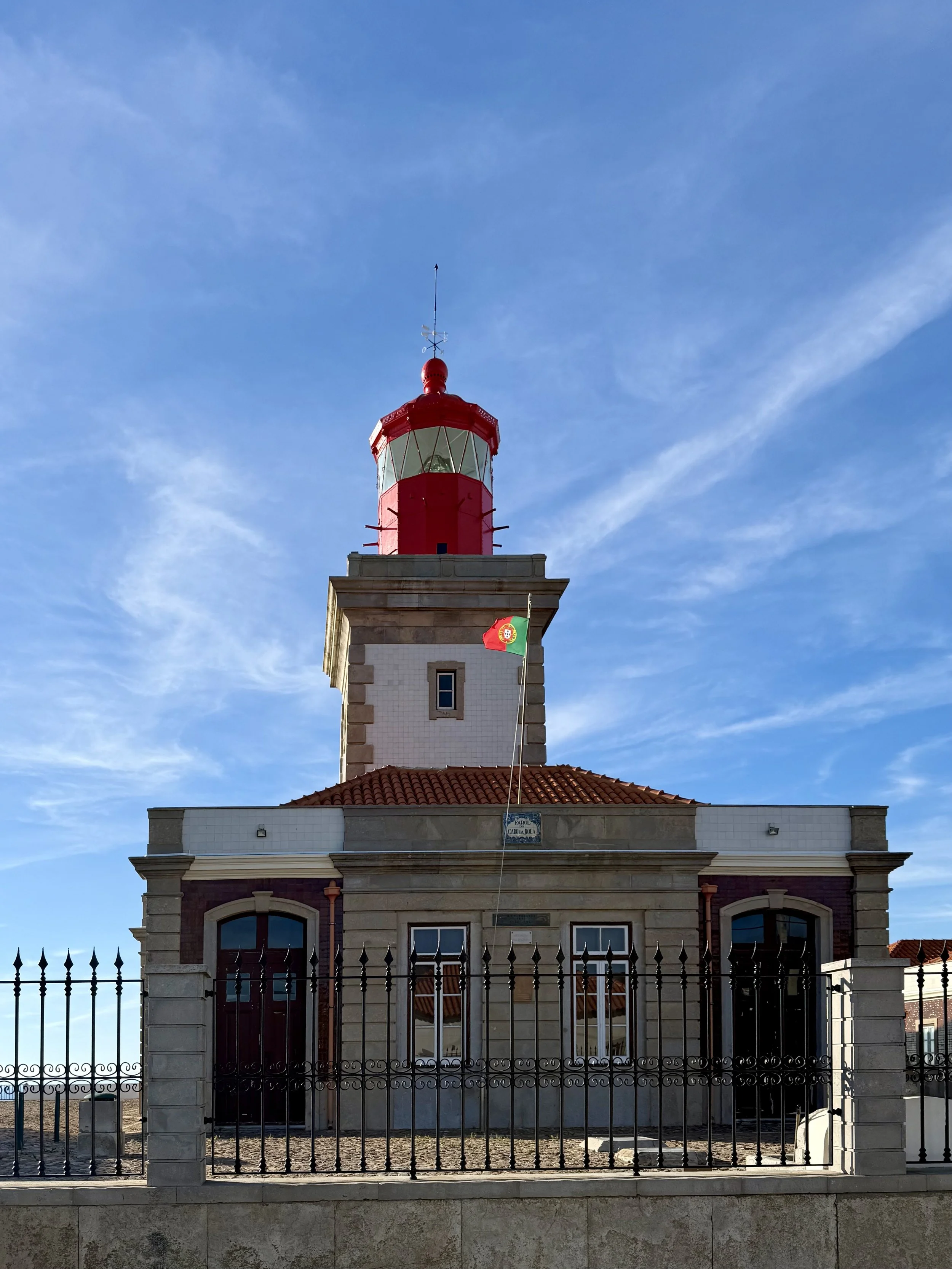
After Sintra, our tour continued to Cabo da Roca — the westernmost point of mainland Europe — and it was jaw-dropping. Dramatic cliffs, the Atlantic stretching out endlessly, and almost no one around compared to Sintra. Worth every minute and the perfect way to close out the day.
Day 3 (if you have it): Alfama, São Jorge Castle & Fado
Alfama
Lisbon's oldest neighborhood tumbles down the hillside toward the Tagus River in a maze of narrow streets, laundry-strung balconies, and amazing viewpoints. Getting a little lost is part of the experience. Don't miss the Miradouro de Santa Luzia for views over the terracotta rooftops and the river. If you're there on a Tuesday or Saturday, the Feira da Ladra flea market is worth a browse.
São Jorge Castle
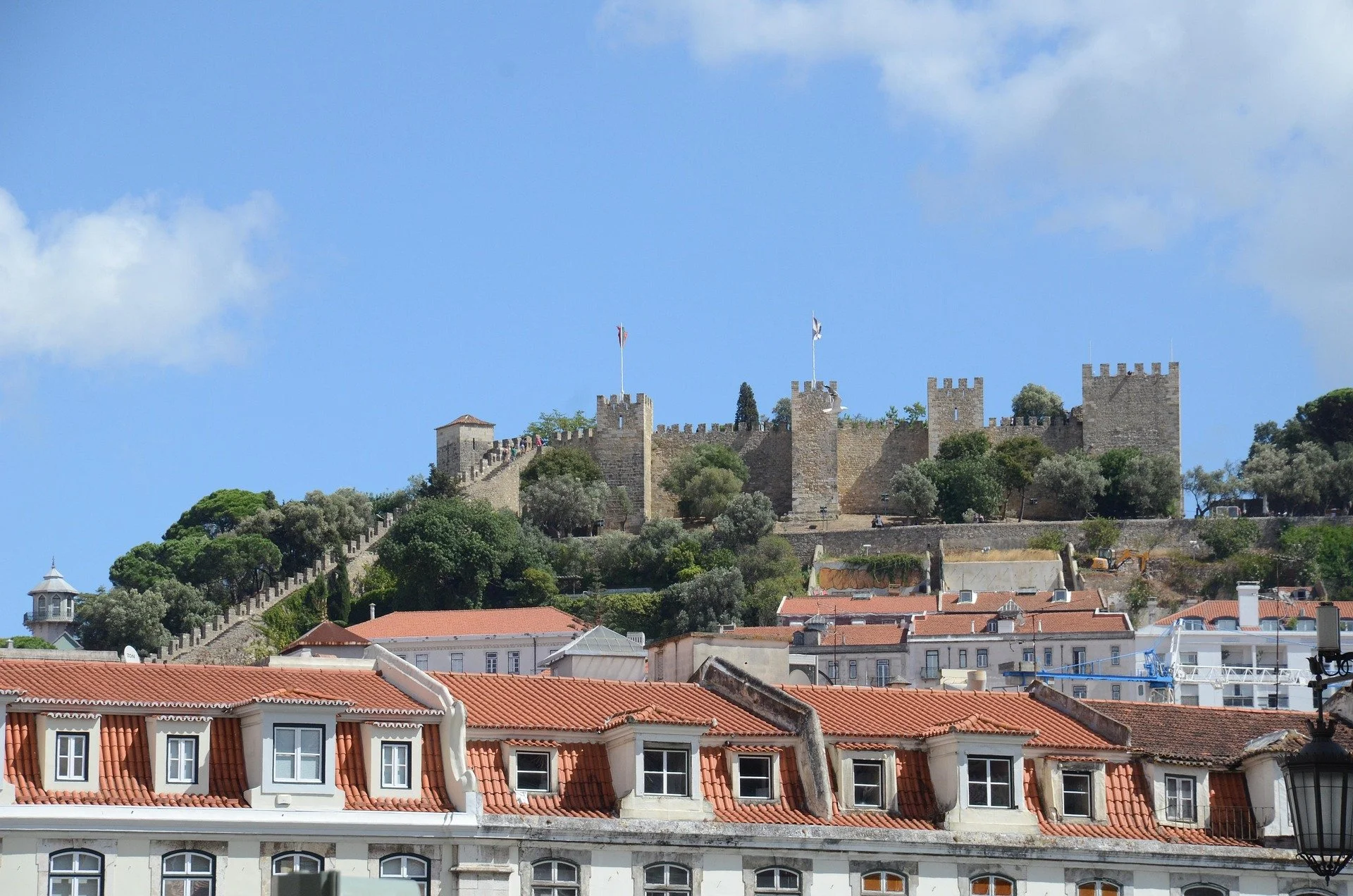
The Moorish castle at the top of Alfama's hill is worth visiting for the history and the panoramic views over the city — built in the 11th century and expanded by the Portuguese after the Reconquista. Allow about an hour.
Secret Food Tour of Lisbon
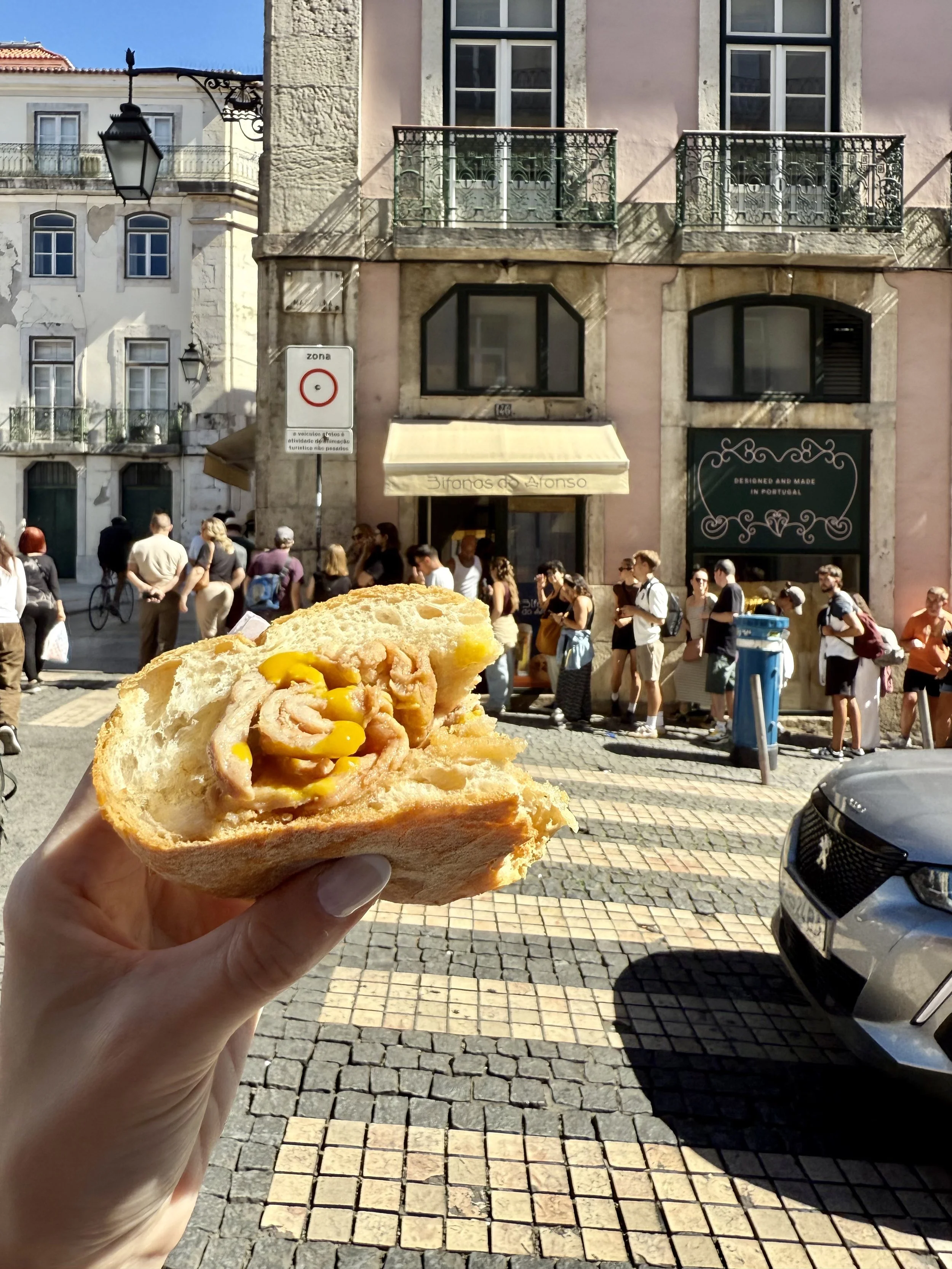
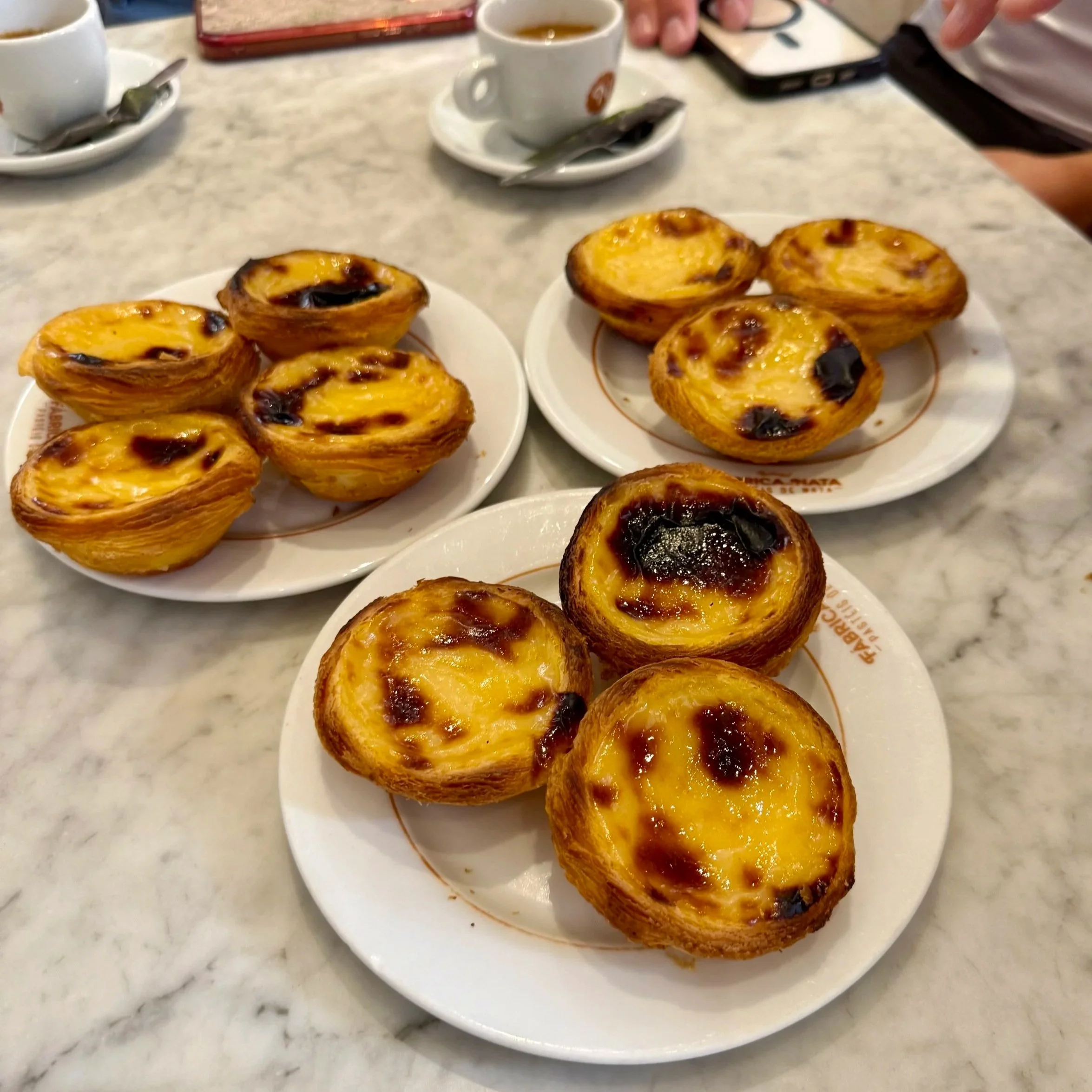
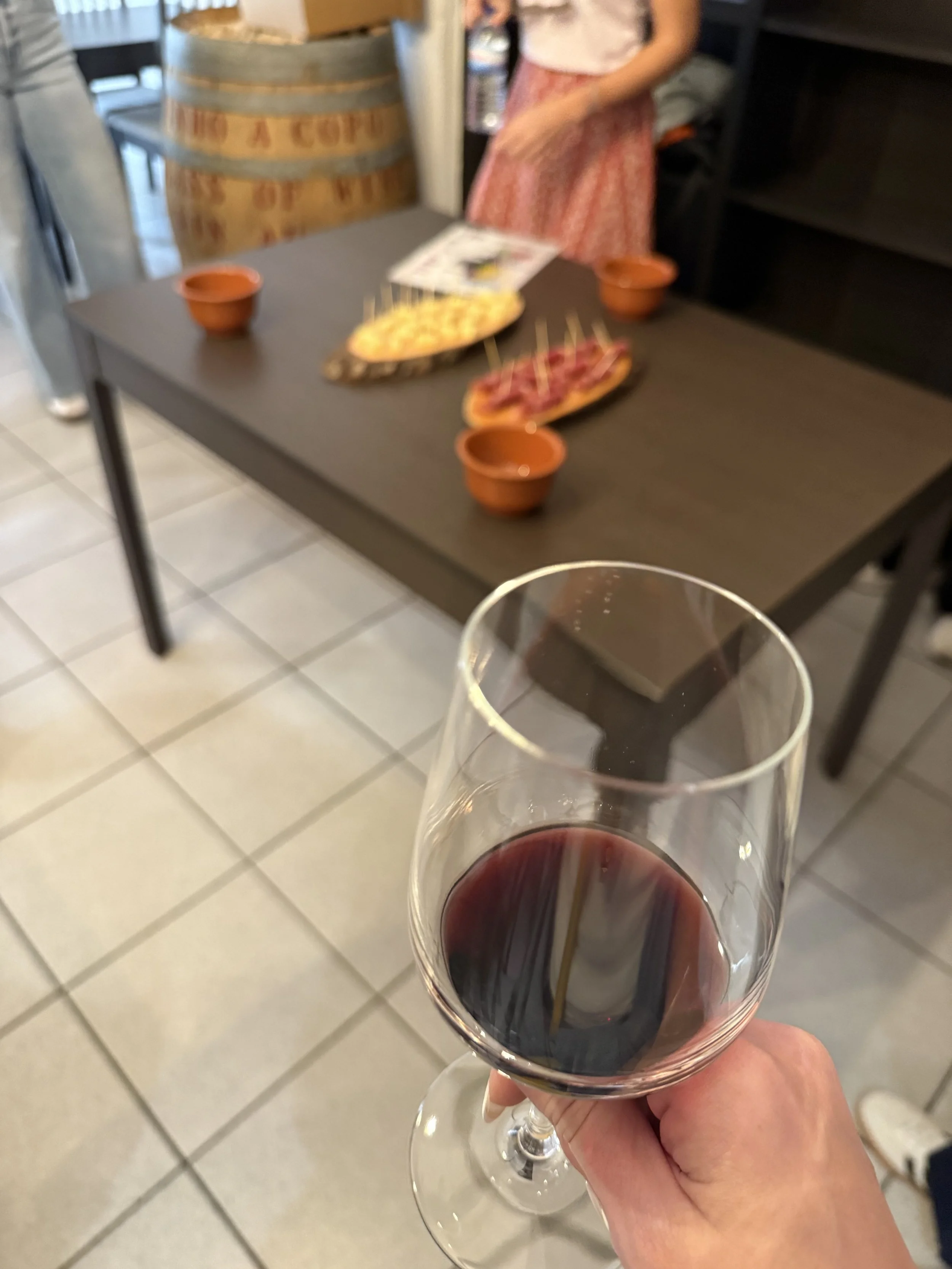
A food tour is a must-add to your Lisbon itinerary. We did a Secret Food Tour with our guide Marta, who was exceptional and very well-connected around the city. We tried around six dishes: a bifana at Bifanas do Afonso, sardines, petiscos with Vinho Verde, bacalhau, Portuguese cheese and Ibérico ham, a fig with a twist at Santa Maria, and a pastel de nata with espresso at Grande Café Lisboa to close it out. You will leave full with an understanding of Lisbon's food culture in a way no restaurant meal alone can give you.
Don’t Miss!
Pastel de nata — everywhere, all the time. Warm, with cinnamon. The ones at Pasteis de Belém in the Belém neighborhood are the most famous (expect a line), but honestly most good pastelarias across the city are excellent.
Belém neighborhood — a short tram or Uber ride west of the center, home to the Torre de Belém, the Jerónimos Monastery (one of the most beautiful buildings in Portugal), and the aforementioned pasteis. Give it a half day.
Ginja — a sour cherry liqueur served in tiny chocolate cups from small street-facing shops in the Baixa. A Ginjinha near Praça do Dom Pedro IV is the classic spot. Get one.
Uber works great in Lisbon and is often the easiest way to get between neighborhoods, especially late at night.
